How Many Calories Will I Burn in a Day?

Most adults burn between 1,600 and 3,000 calories a day. Around 1,200 to just over 2,000 of that is your resting burn, the energy your body spends just to stay alive. The rest comes from daily movement and exercise. Men usually sit higher in that range and women lower, but individual variation is huge.
Most of what your body spends in a day has nothing to do with the gym. It goes on breathing, digesting, keeping your heart beating, and repairing whatever got banged up yesterday. A workout barely registers next to all that.
The part of your metabolism that never clocks out
Even flat on the couch, your body is still working. Organs don’t take breaks. Cells still divide, blood still circulates, and your brain keeps running in the background.
This baseline burn is often called resting metabolism. Add movement, chores, and actual exercise, and the full daily number tends to land between 1,600 and 3,000 calories. Think of it as a moving target rather than one fixed number. Stress, sleep, and even temperature can nudge it a little.
How to work out your number
No single formula is agreed on by everyone, but a few equations are widely used, such as the Mifflin-St Jeor equation. They all rely on roughly the same inputs: weight, height, age, and sex. You calculate your baseline burn first, then multiply it by a factor for how active you are.
| Activity level | What it looks like | Multiply baseline by |
|---|---|---|
| Sedentary | Desk job, little exercise | 1.2 |
| Lightly active | Light exercise 1 to 3 days a week | 1.375 |
| Moderately active | Exercise 3 to 5 days a week | 1.55 |
| Very active | Hard exercise 6 to 7 days a week | 1.725 |
| Extra active | Hard training plus a physical job | 1.9 |
The result is roughly your maintenance calories, the amount you need to eat to stay at the same weight. A moderately active man in his late thirties often lands somewhere around 2,500 to 2,800 calories, before anyone talks about cutting or bulking.
None of this is precise. These are estimates built from averages, not lab readings. Genetics, your muscle-to-fat ratio, and your hormones all throw things off. A smartwatch or online calculator gets you in the right neighborhood, but it won’t hand you the exact truth.
Why two people with the same stats burn differently

Two people with the same height and weight can still burn noticeably different amounts. A few things explain why.
Age. Metabolism slows gradually as you get older, partly because muscle is lost over time if you don’t do anything to hold onto it.
Sex. Men tend to carry more muscle and less body fat, and muscle costs more energy to maintain at rest. Fat tissue is cheap to keep.
Body composition. This matters more than the number on the scale. A smaller, more muscular person can out-burn a bigger person who carries more fat.
Genetics. Some people simply run hotter metabolically, and it has nothing to do with discipline.
Digestion. Breaking down, absorbing, and processing food uses energy too.
Life stage. Pregnancy and breastfeeding raise energy demand, since the body is supporting growth and milk production on top of everything else.
Where the calories actually go during the day
For most people, workouts are not the main event. Small movement spread across the day, like pacing on calls or taking the stairs, often adds up to more than one gym session. Intensity matters once you exercise: a 150 pound (68 kg) person burns roughly 250 to 300 calories jogging for 30 minutes, about 150 to 180 gardening, and under 150 on a casual stroll. A heavier person burns more doing the same activity, since there is more mass to move.
Lifting weights is a special case. Your muscles spend time repairing afterward, so resistance training can keep your metabolism slightly raised for hours.
Using your number to lose, maintain, or gain weight

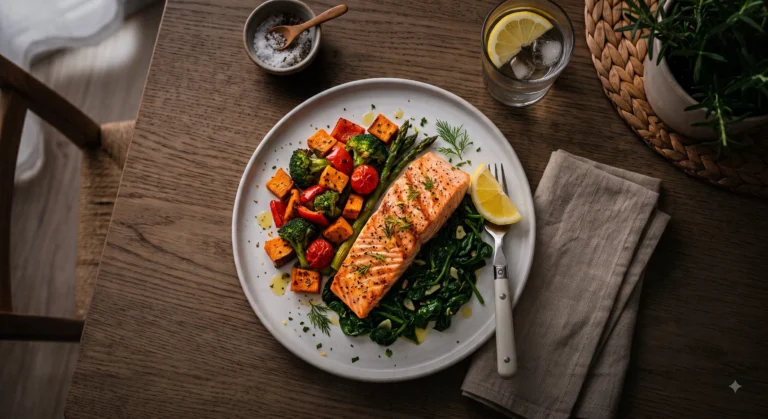
To lose weight, eat less than you burn, consistently, over time. A moderate deficit is easier to stick with than a crash diet, which tends to backfire with cravings and exhaustion. To maintain, eat what you burn, though daily activity changes enough that it takes some attention. To gain muscle, add a modest surplus, enough protein, and resistance training. In all three cases, vegetables, fruit, and lean protein make your target far easier to hit.
Do men really burn more than women?
Broadly, yes, because men typically carry more muscle and less fat, and muscle costs more energy to maintain. But sex alone doesn’t decide it. A muscular, active woman can easily out-burn a sedentary man of similar size, so body composition and activity level matter more.
What moves the needle long term
Chasing a higher burn through sheer willpower rarely works. Building it into habits does.
- Strength training is probably the most direct lever. More muscle means higher resting energy needs all day, not just during the workout.
- Protein supports that. Skimp on it and you work against yourself even if the training is solid.
- Sleep and stress quietly affect hormones in ways that work against fat loss, no matter how clean your diet looks on paper.
- Daily movement compounds over weeks in a way one intense session a week can’t match.
The formulas are a decent starting point, but they are not the whole story. Your real number lives somewhere between the math and how you actually eat, move, sleep, and live.
Sources
- Mifflin MD, et al. “A new predictive equation for resting energy expenditure in healthy individuals.” American Journal of Clinical Nutrition, 1990.
- Dietary Guidelines for Americans (calorie and activity guidance for adults).
- Harvard Health Publishing, calories burned in 30 minutes of activities.
Disclaimer: This article is for general informational purposes only and isn’t a substitute for professional medical or nutritional advice. Everyone’s body and health needs are different, so it’s a good idea to consult a doctor or registered dietitian before making significant changes to your diet or exercise routine.
Frequently Asked Questions
Quick answers to common questions about how many calories you burn in a day .
Calculate Your Exact Calorie Burn
Get a personalized estimate of how many calories you burn in a day. Use our free, evidence-based calculators to find your daily energy needs and look up individual food macros.
Was This Article Helpful?
Your feedback helps us improve our content. This form is not connected to customer support — for questions, please visit our Contact Us page.






3 Comments