The Complete 7 Day Nutrition Plan for Muscle Gain
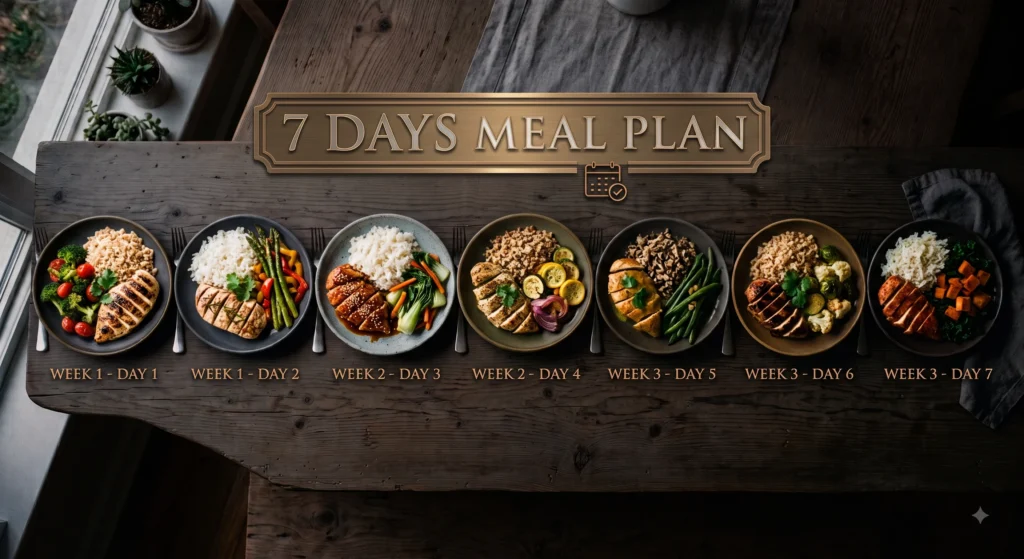
Building muscle is not only about lifting heavier weights in the gym. What you eat plays an equally important role in helping your body repair, recover, and grow stronger.
Without the right fuel, even the most disciplined training routine will fail to deliver noticeable results. That’s why this guide walks you through a complete seven day meal plan designed to support muscle growth, along with practical tips on calories, macronutrients, and food choices.
Why Nutrition Matters for Building Muscle
Muscle tissue grows when your body repairs tiny fibers that break down during resistance training. This repair process requires a steady supply of protein, energy, and micronutrients.
So if you are not eating enough calories or protein, your body simply does not have the raw materials needed to build new muscle, no matter how hard you train.
Consistency matters just as much as the food itself. Eating well on one day and skipping meals the next will slow your progress, which is why a structured meal plan removes guesswork and helps you stay on track every single day of the week.
Daily Calorie and Macro Requirements for Muscle Gain
To build muscle, most people need to eat in a slight calorie surplus, typically around two hundred to five hundred calories above their maintenance level. That said, eating too far above maintenance often leads to excess fat gain, while eating too little slows down muscle repair.
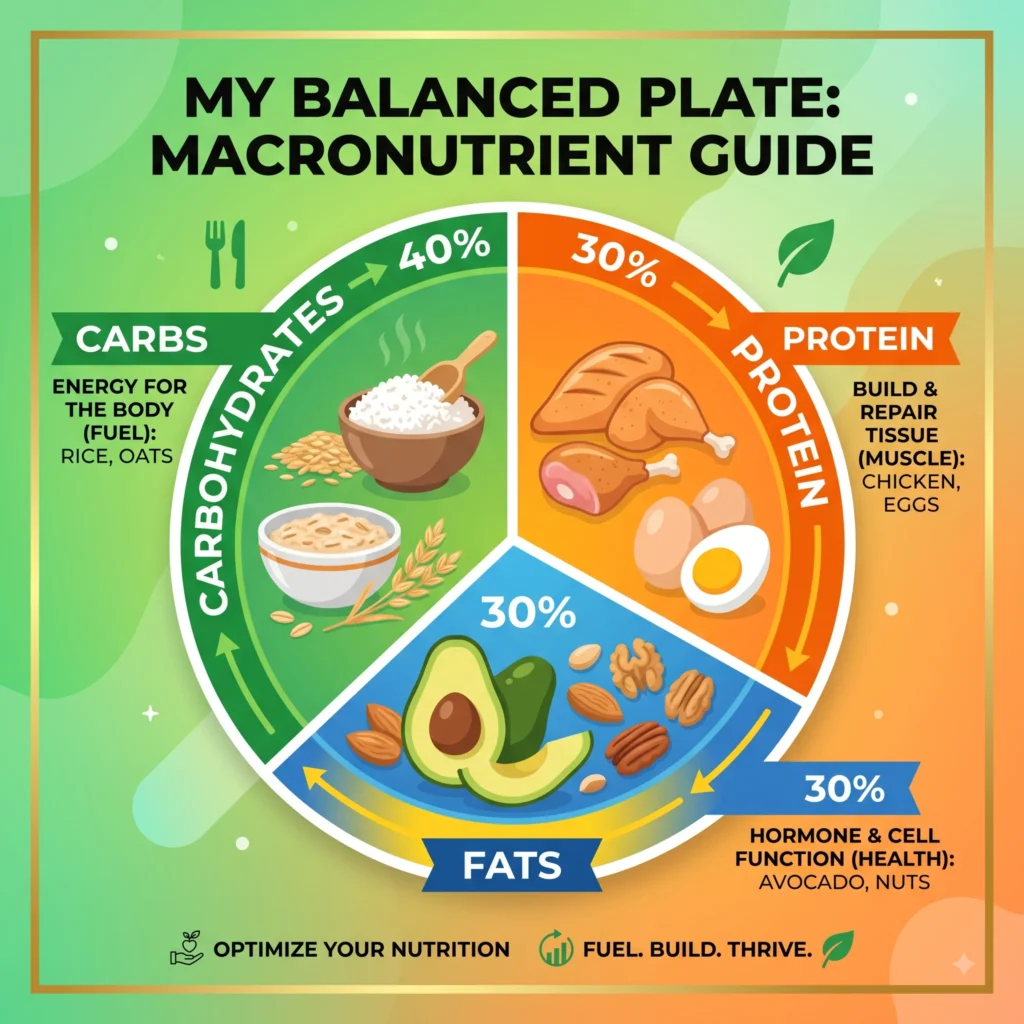
Protein intake should generally fall between one point six and two point two grams per kilogram of body weight each day. Carbohydrates fuel your workouts and help replenish glycogen stores too, so they should make up a large portion of your daily calories. Healthy fats, meanwhile, support hormone production, including testosterone, which plays a direct role in muscle growth.
A simple starting point for many active individuals is roughly forty percent of calories from carbohydrates, thirty percent from protein, and thirty percent from fats. These numbers can be adjusted, though, based on your body type, activity level, and personal goals.
Best Foods for Muscle Growth
Choosing the right foods makes it much easier to hit your daily targets without overeating or feeling deprived. Because certain foods are more nutrient dense than others, they should form the base of every meal.

Top Protein Sources
Chicken breast, turkey, lean beef, eggs, and fish such as salmon and tuna are excellent choices. Similarly, Greek yogurt, cottage cheese, and whey protein powder are convenient options for boosting protein intake between meals. For those who prefer plant based options, lentils, chickpeas, tofu, and tempeh work just as well.
Best Carb Sources
Brown rice, oats, quinoa, sweet potatoes, and whole grain bread provide steady energy throughout the day. In addition, fruits such as bananas and berries offer quick carbohydrates along with useful vitamins and antioxidants.
Healthy Fats to Include
Avocados, olive oil, nuts, seeds, and fatty fish supply the fats your body needs for hormone balance and joint health. Moreover, these fats also make meals more satisfying, which helps when eating in a calorie surplus.
Your Complete 7-Day Meal Plan
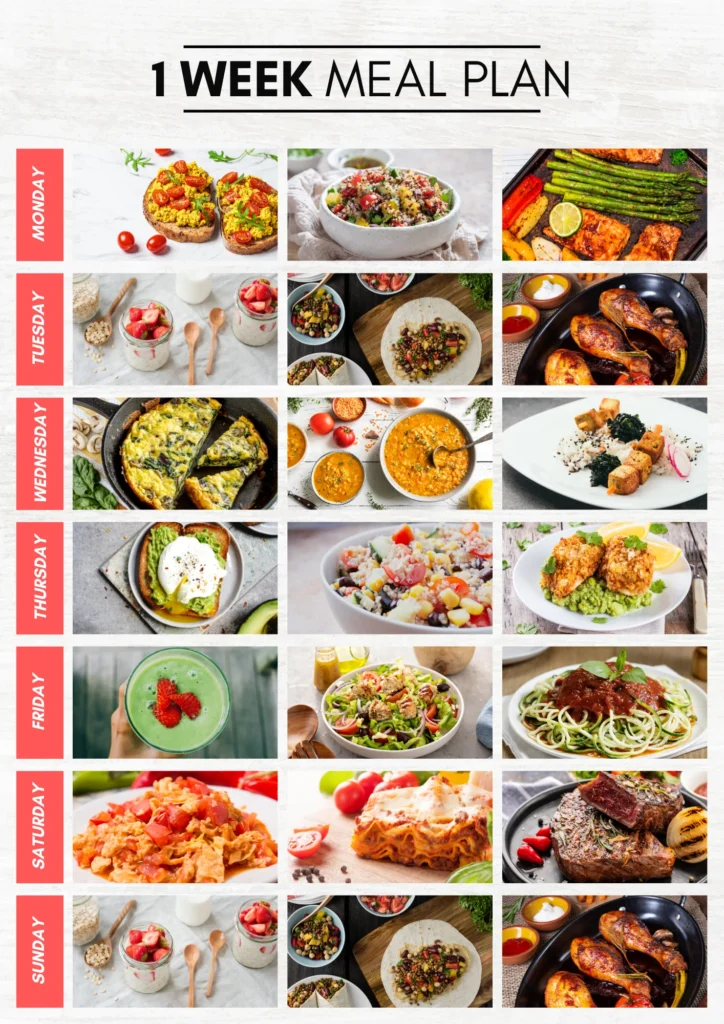
Below is a sample weekly plan built around whole foods and balanced macronutrients. Because everyone has different needs, portion sizes can be adjusted depending on your body weight and calorie target.
Day 1
Start the day with scrambled eggs, oats topped with banana, and a glass of milk. Lunch is grilled chicken breast with brown rice and steamed broccoli, and dinner brings baked salmon, sweet potato, and a mixed green salad. Round it off with a Greek yogurt snack and almonds between meals.
Day 2
Begin with a protein smoothie made from whey powder, oats, and peanut butter. A turkey wrap with whole grain tortilla, spinach, and hummus works well for lunch, while dinner is a lean beef stir fry with mixed vegetables and quinoa. Cottage cheese with pineapple makes a solid afternoon snack.
Day 3
Try Greek yogurt with granola and mixed berries for breakfast. Lunch is a tuna salad with whole grain bread and a side of carrot sticks, and dinner goes with grilled chicken thighs, roasted potatoes, and green beans. A handful of mixed nuts makes a great mid-morning snack.
Day 4
Enjoy whole grain toast with eggs and avocado for breakfast. Lunch is a quinoa bowl with black beans, corn, and grilled shrimp, while dinner features baked cod with brown rice and asparagus. A protein shake after your workout helps with recovery.
Day 5
Oatmeal with peanut butter and sliced banana makes a filling breakfast. A grilled chicken Caesar salad with whole grain croutons works nicely for lunch, and dinner can be lean beef tacos with whole wheat tortillas and salsa. Cottage cheese with berries rounds out the evening as a snack.
Day 6
Start with a vegetable omelet and whole grain toast. Lunch pairs salmon with wild rice and steamed vegetables, and dinner brings turkey chili with beans and a side salad. Apple slices with almond butter make an easy snack between meals.
Day 7
Begin with a Greek yogurt parfait layered with oats and mixed fruit. Grilled chicken with sweet potato mash and green beans is a solid lunch choice, while dinner is shrimp stir fry with brown rice and mixed peppers. Close the day with a small handful of walnuts.
Meal-Prep Tips to Save Time
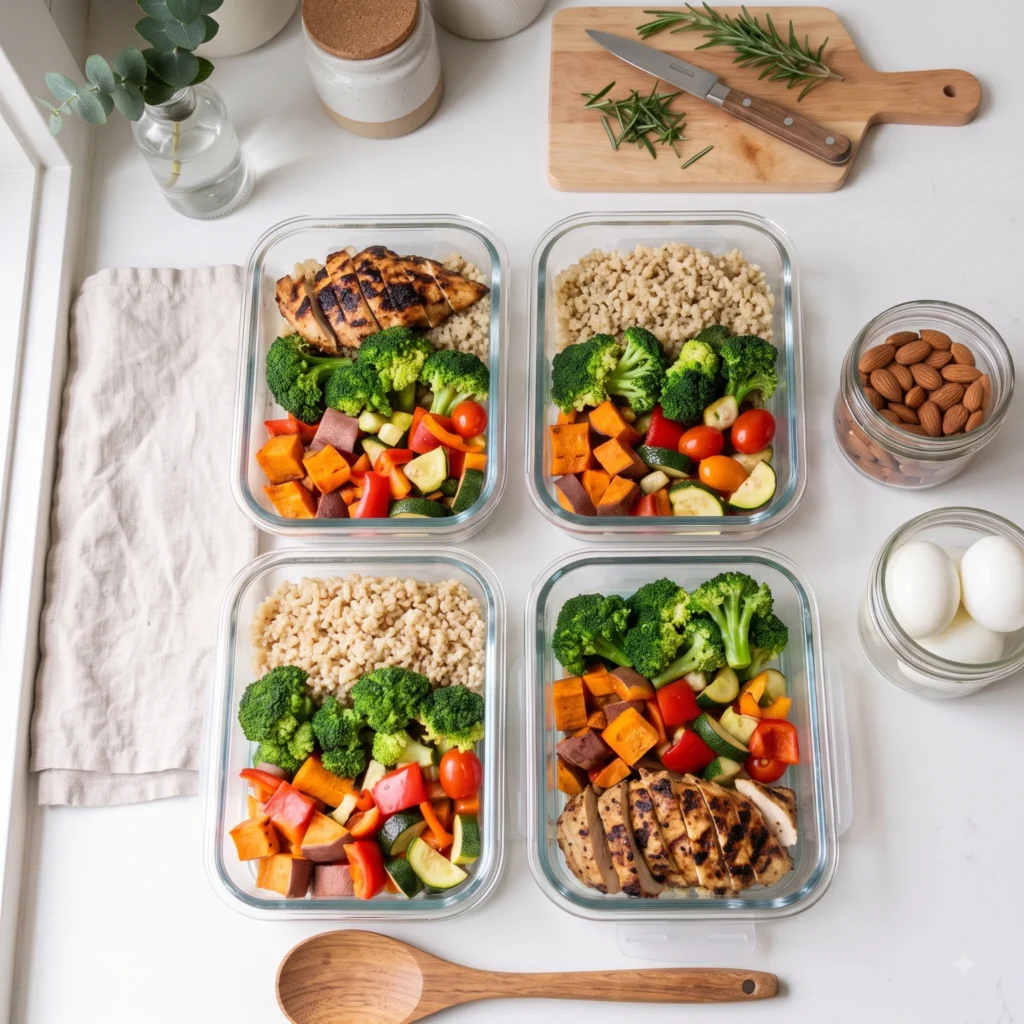
Cooking large batches of protein such as chicken breast or ground turkey at the start of the week saves significant time on busy days. Storing cooked grains like rice and quinoa in the fridge, too, means they can be reheated quickly with any protein and vegetable combination.
Chopping vegetables in advance and keeping them in airtight containers makes it easier to throw together a balanced meal in minutes. Investing in a set of reusable meal containers helps with portion control as well, which is especially useful when tracking calories and macros.
Preparing snacks ahead of time, such as portioning nuts into small bags or boiling a batch of eggs, reduces the temptation to reach for less nutritious options when hunger strikes between meals.
Supplements That Can Support Your Results
While whole foods should always come first, certain supplements can help fill gaps in your diet. Whey protein powder is a convenient way to boost daily protein intake, especially right after training. Creatine monohydrate is one of the most researched supplements available. It’s been shown to support strength and muscle size gains.
A basic multivitamin can help cover any micronutrient gaps, particularly for people with restrictive diets. Fish oil supplements may support joint health too, and can reduce inflammation from intense training sessions. That said, supplements work best when paired with a solid diet. They’re not a replacement for real food.
Common Mistakes That Slow Down Muscle Gain
Many people underestimate how many calories they actually need to gain muscle, which leads to slower progress than expected. Skipping meals or going long stretches without eating can limit the steady supply of amino acids your muscles need for repair.
Relying too heavily on processed foods, even when hitting calorie targets, can leave you short on essential vitamins and minerals. Ignoring hydration is another common oversight, since water plays a key role in nutrient transport and muscle function.
Expecting fast results and giving up too soon is a mistake many beginners make. Muscle growth takes consistent effort over weeks and months, not days.
Final Thoughts
A well structured meal plan takes much of the stress out of eating for muscle gain. By focusing on adequate calories, sufficient protein, and a good balance of carbohydrates and fats, you give your body everything it needs to recover and grow stronger after each workout. Therefore, when you pair this plan with consistent training and enough sleep, you will be well on your way to reaching your muscle building goals.
A Note Before You Start This Plan
This article is for informational purposes only and is not a substitute for professional medical or dietary advice. Individual protein, calorie, and supplement needs vary based on age, health conditions, kidney function, and other personal factors. Consult a doctor or registered dietitian before starting any new nutrition plan or supplement regimen, especially if you have an existing medical condition, take medication, or are new to strength training.vitaclac.com its authors, and contributors make no warranties or guarantees regarding the accuracy, completeness, or reliability of the information provided on this site. Any action you take based on the content of this article is strictly at your own risk. We shall not be held liable for any loss, injury, illness, or damage direct or indirect arising from the use of, or reliance on, the information presented here.
Frequently Asked Questions
Build Muscle With the Right Calorie Target
Find out exactly how many calories and macros you need daily to build muscle and gain healthy weight.
Was this article helpful?
Your feedback helps us improve our guides. Need support? Reach out via our Contact Us page.





👍