How to Gain Weight the Healthy Way

Add 300 to 500 calories a day from protein, complex carbs, healthy fats, and dairy, spread across five or six meals, and pair it with some strength training. That slow surplus builds muscle instead of just belly fat.
“Just eat more” is the advice everyone gives you when you’re trying to gain weight, as if it’s the easy version of the fitness struggle. It isn’t. Most people who try it end up eating randomly instead of consistently, and mostly foods that fill them up without adding much. After a week or two nothing has changed, and they get discouraged and give up.
That’s the trap most people fall into early on. Fries, soda, and a family-size bag of chips are calories, so technically the scale will move. But weight gained that way tends to settle around the belly, and it brings the same problems as any junk-heavy diet: blood sugar swings, higher heart risk, and feeling tired all the time. If you want to look and feel better, not just weigh more, the type of food matters just as much as how much of it you eat.
Why Being Underweight Is Its Own Problem
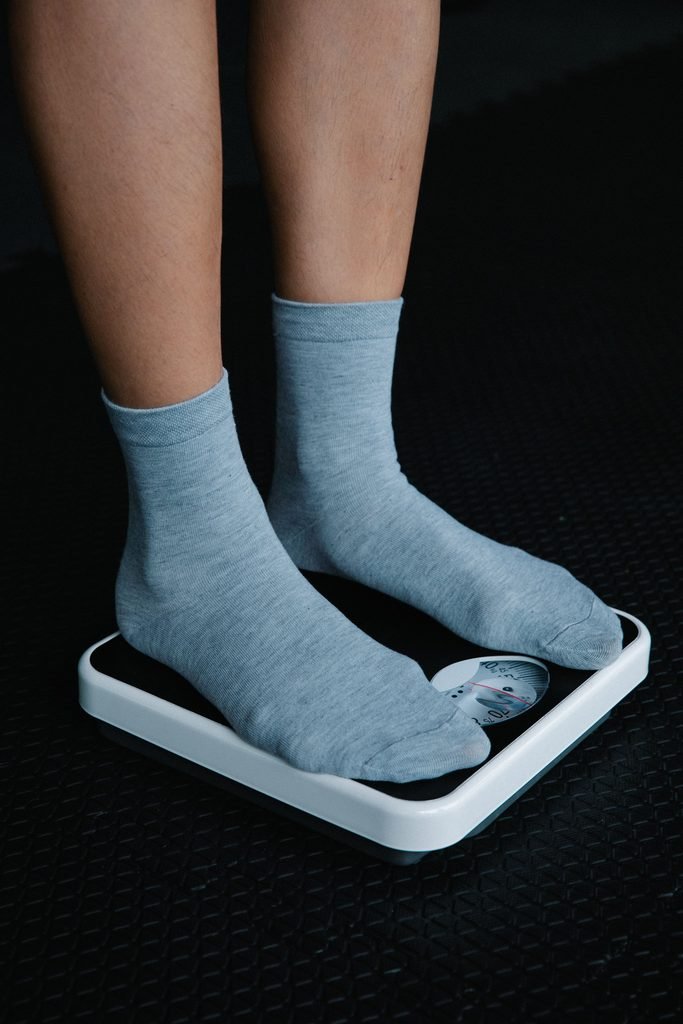
Being thin isn’t always harmless. A BMI under 18.5 is linked to a weaker immune system and, in some cases, fertility problems. The causes vary: a naturally fast metabolism, an illness, a hospital stay, or a physically exhausting job. Randomly eating more rarely fixes it on its own, and if there’s an underlying medical issue, a doctor or dietitian should be involved.
The Real Math Behind Gaining Weight
Weight gain comes down to consistently taking in more energy than your body burns. Use our Maintenance Calories Calculator to find your baseline, then add roughly 300 to 500 calories a day. A slow surplus is more likely to build muscle, while a sudden flood of calories mostly turns into fat.
Spread that intake across five or six smaller meals instead of two huge ones. Trying to eat a real surplus in two sittings usually just makes you feel sick.
Protein-Rich Foods for Muscle, Not Just Weight
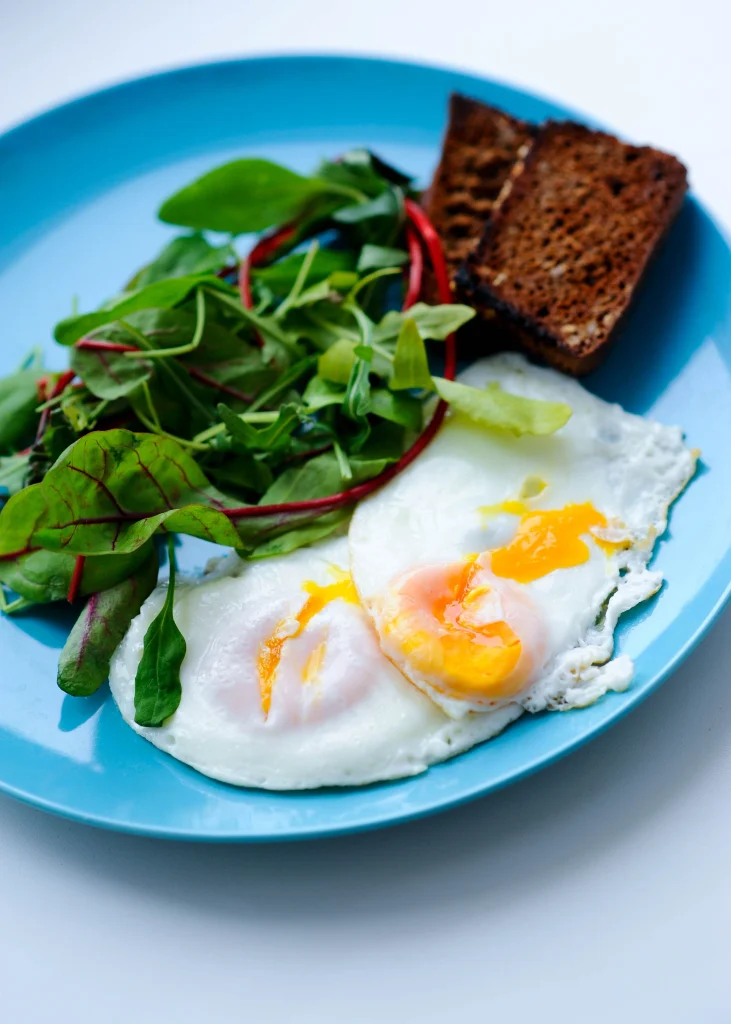
This is the one nobody can skip. Without enough protein, the extra weight tends to show up as fat instead of muscle, no matter how many calories you eat. Eggs are hard to beat: cheap, versatile, and there’s no good reason to throw away the yolk. Chicken, beef, and salmon are strong choices too, and salmon adds omega-3 fats that are good for your heart.
If meat isn’t part of your diet, lentils, beans, paneer, and Greek yogurt do a similar job. A scoop of whey or plant protein in a smoothie helps on days when a full meal isn’t happening.
Protein doesn’t have to come from one big source at every meal. A handful of roasted chana, a spoon of peanut butter, or a boiled egg between meals adds up over the day without feeling like extra effort.
Protein and calories at a glance
| Food | Serving | Protein | Calories |
|---|---|---|---|
| Egg | 1 large | about 6 g | about 70 |
| Chicken breast, cooked | 3 oz (85 g) | about 26 g | about 140 |
| Paneer | 100 g | about 18 g | about 280 |
| Full-fat Greek yogurt | 170 g | about 15 g | about 165 |
| Lentils, cooked | ½ cup | about 9 g | about 115 |
| Whole milk | 1 cup | about 8 g | about 150 |
| Peanut butter | 2 tablespoons | about 7 g | about 190 |
Complex Carbs, Healthy Fats, and Dairy
Complex carbs: a solid chunk of your calories should come from rice, oats, potatoes, sweet potatoes, and whole grain bread. They give steady energy without the crash of refined sugar, and they refill the glycogen your muscles use during exercise. A bowl of rice with protein and a drizzle of oil carries more calories than most people assume, and it’s cheap enough to eat in bulk.
Healthy fats: fat is the most calorie-dense thing you can eat, which helps when you’re gaining weight without stuffing yourself. Nuts, peanut butter, olive oil, and avocado pack a lot of calories into a small amount of food. A tablespoon of olive oil over vegetables adds well over a hundred calories without changing the taste.
Dairy: whole milk, cheese, and Greek yogurt bring protein, fat, and calcium together, so they’re easy to add to almost any meal. A glass of milk before bed is an old-school trick that still holds up. Small swaps help too, like whole milk instead of water in your morning oats.
What a Day Might Actually Look Like
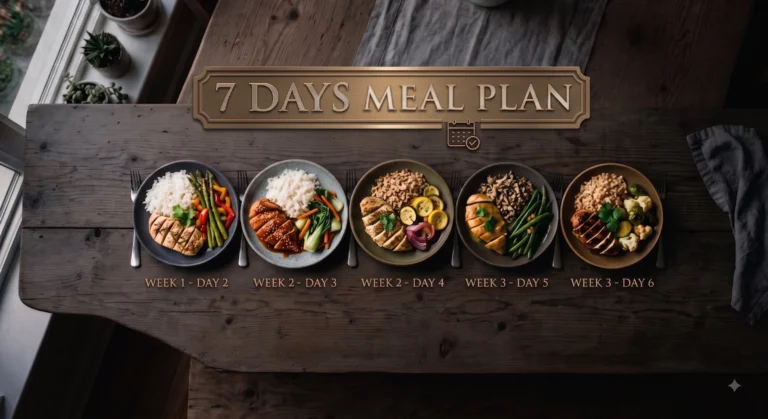
Think of this as a pattern to repeat, not a rigid plan. This example adds up to roughly 2,900 calories, which suits someone whose maintenance is around 2,400 to 2,600. Scale the portions to your own number.
| Meal | What to eat | Approx. calories |
|---|---|---|
| Breakfast | 2 eggs, 2 slices whole grain toast with 1 tablespoon peanut butter, 1 glass whole milk | about 545 |
| Mid-morning | 1 ounce nuts and a banana | about 270 |
| Lunch | 1½ cups cooked rice, 6 ounces cooked chicken (or lentils), vegetables cooked in 1 tablespoon oil, 170 g full-fat yogurt | about 875 |
| Afternoon | 30 g roasted chana and 1 boiled egg | about 180 |
| Evening shake | 1 scoop whey blended with 1 cup whole milk | about 270 |
| Dinner | 5 ounces grilled meat, 2 rotis or bread, vegetables with a little oil | about 610 |
| Before bed | 1 glass whole milk | about 150 |
Does It Differ for Men and Women?
Not really, at the core. Women sometimes worry about how a sudden calorie increase affects hormonal balance, which is fair, so a gradual build works better than an aggressive spike. Paneer, eggs, sweet potatoes, and peanut butter are easy staples. For men, especially if muscle is the goal, resistance training matters a lot, because without it the extra calories and protein don’t get put to much use.
A Few Habits That Make the Difference
Choose full-fat dairy over low-fat, and don’t always go for the leanest cut of meat. A little extra fat isn’t the enemy when the goal is weight gain. Watch how much you drink right before meals, since filling up on fluids can blunt your appetite. Save most of your drinking for between meals, and if you want calories from a drink, pick whole milk or a smoothie over plain water.
Patience matters more than people admit
Don’t expect much on the scale for the first couple of weeks. That’s normal. Weight gain is slower than most people expect, and daily weigh-ins mostly show water and food volume bouncing around. Weigh yourself once a week, on the same day and time, and judge the trend over a month. If nothing has moved after three or four weeks of consistent eating, bump up the surplus a bit instead of overhauling the whole plan.
Putting It All Together
Gaining weight the right way isn’t about eating everything in sight. It’s about consistently choosing food that does something for you: protein for muscle, complex carbs for energy, fats for density, and dairy to tie it together, across five or six meals a day. Add resistance training if building muscle is the goal, and check in with a doctor if you’re not sure where to start. None of this is meant to be permanent; once you’re at a healthy weight, a doctor or dietitian can help you shift toward maintenance.
If you want to move faster, see our guide on how to gain weight fast. For more ideas, read about high calorie foods for weight gain.
Disclaimer: This article is for general informational purposes only and isn’t a substitute for professional medical advice. Individual calorie and nutrition needs vary, so consult a doctor or registered dietitian before making significant changes to your diet, especially if you have an underlying health condition. Calorie and protein values are approximate.
Sources
- USDA FoodData Central (nutrition values for common foods)
- Dietary Guidelines for Americans (calorie and macronutrient ranges)
Frequently Asked Questions
Calculate Your Nutrition Targets
Accurately determine your daily energy needs, calculate your calorie burn, and check individual meals with our free evidence-based calculators.
Was this article helpful?
Your feedback helps us improve our guides. Need support? Reach out via our Contact Us page.



One Comment