30-Day Weight Loss Challenge: Complete Guide

If you have been putting off a fitness routine while waiting for the “right time,” a 30-day challenge can give you the push you need. It is short enough to feel achievable, long enough to build a real habit, and specific enough that you never have to guess what to do next.
Most online challenges say things like “exercise daily” or “eat healthy” and stop there. This guide gives you the numbers: how many push-ups, how many minutes of cardio, what a day of food can look like, and how to work out a calorie target of your own.
What Is a 30-Day Weight Loss Challenge (And Is It Realistic)?
A 30-day weight loss challenge is a structured month of daily movement, better eating habits and a few simple lifestyle changes. Thirty days will not transform your body, but it is enough time to lose a meaningful amount of weight and make exercise feel normal.
Most people notice better energy and a different fit in their clothes before they see a big change on the scale. Think of the challenge as an on-ramp to a healthier routine, not a magic fix.
How Much Weight Can You Realistically Lose?
A safe, sustainable rate is about 0.5 to 1 kg (1 to 2 pounds) per week, which puts a realistic 30-day result at roughly 2 to 4 kg (4 to 8 pounds). Some of the early drop, especially in week one, is water weight, and that is normal. Trying to lose much more usually means extreme restriction, which is harder to keep up and more likely to cost you muscle instead of fat.
Your food matters as much as your workouts. As a rough rule of thumb, eating about 500 calories a day below your maintenance level leads to around 0.5 kg of fat loss per week. To find your own starting point, use our Maintenance Calories Calculator or Calorie Calculator, then check what you eat with the Food Calories Calculator. Do not cut deeper than that to speed things up. Our guide on how many calories you should eat per day explains how needs differ by age, size and activity.
Your Week-by-Week Plan (With Exact Numbers)
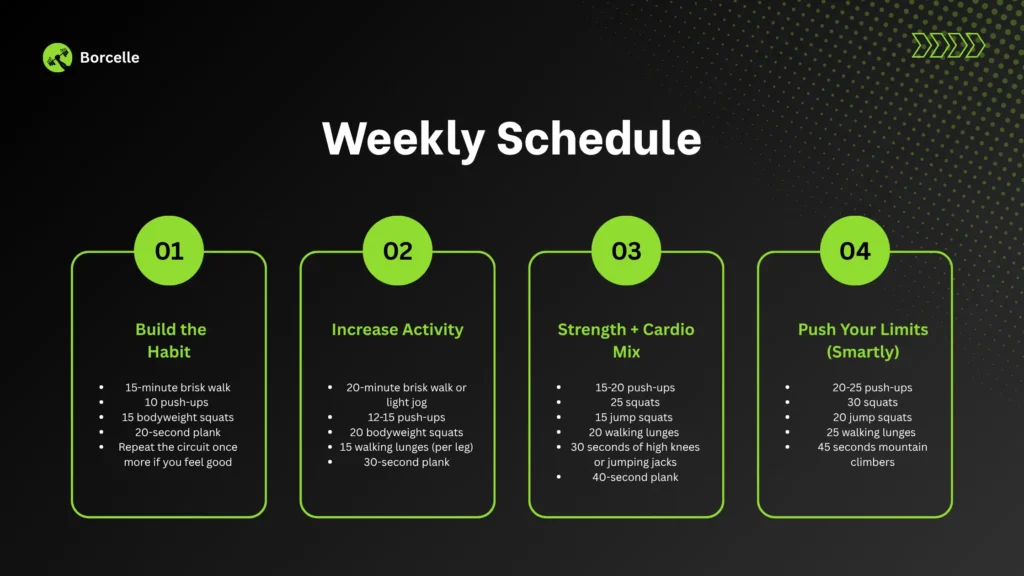
Week 1: Build the Habit. Do this circuit 4 days this week, resting 30-45 seconds between exercises:
- 15-minute brisk walk (or walk in place if indoors)
- 10 push-ups (on knees if needed)
- 15 bodyweight squats
- 20-second plank
- Repeat the circuit once more if you feel good
Week 2: Increase Activity. Move to 5 days this week, resting 20-30 seconds between exercises, 2 full rounds:
- 20-minute brisk walk or light jog
- 12-15 push-ups
- 20 bodyweight squats
- 15 walking lunges (per leg)
- 30-second plank
Week 3: Strength + Cardio Mix. 5-6 days this week, 2-3 rounds, 20-second rest between exercises:
- 15-20 push-ups
- 25 squats
- 15 jump squats (or regular squats if joints need care)
- 20 walking lunges (per leg)
- 30 seconds of high knees or jumping jacks
- 40-second plank
Week 4: Push Your Limits (Smartly). 6 days this week, 3 rounds, minimal rest (15-20 seconds):
- 20-25 push-ups
- 30 squats
- 20 jump squats
- 25 walking lunges (per leg)
- 45 seconds mountain climbers
- 45-60 second plank
- 25-30 minute run, brisk walk, or cycling session
Take one full rest day each week, no matter which week you’re on. Your muscles need it to actually improve.
Diet Plan With Real Portions

Diet Plan With Real Portions
Advice like “eat more vegetables” does not help much on its own. Here is what a full day can look like, with amounts you can measure.
Breakfast: 2 to 3 eggs, 1 slice of whole wheat toast and 1 medium fruit (banana, apple or orange). Or try 1/2 cup of dry oats, cooked, topped with a handful of berries (about 30 g) and 1 tablespoon of nuts.
Mid-morning snack: A small handful of almonds (about 20 to 25 g, or 15 to 20 almonds) or 1 cup of plain yogurt.
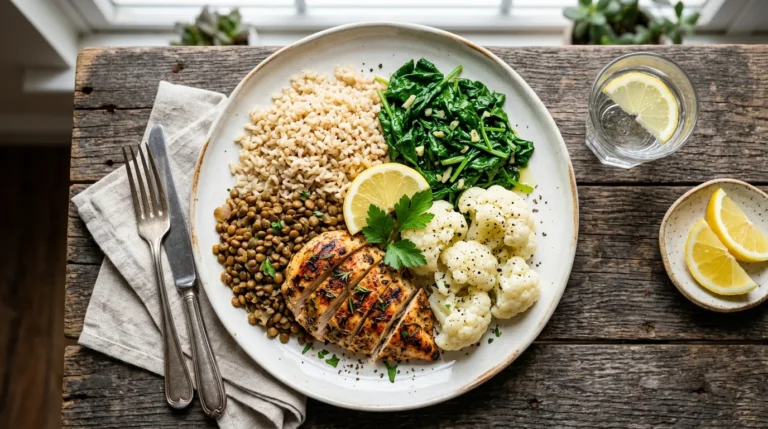
Lunch: 150 to 200 g of grilled chicken or fish, or 1 cup of cooked lentils or chickpeas. Add 1 to 2 cups of mixed vegetables and either 1/2 cup of cooked brown rice or 1 medium whole wheat roti.
Afternoon snack: 1 cup of raw vegetable sticks (carrots, cucumber, bell pepper) with 2 tablespoons of hummus, or 1 medium piece of fruit.
Dinner: 150 g of lean protein (chicken, fish, tofu or paneer) with 1 to 2 cups of vegetables and a smaller carb portion than at lunch, around 1/3 cup of rice or half a roti.
Through the day: Aim for 8 to 10 glasses of water, and swap at least one sugary drink for water or unsweetened tea.
Treat these amounts as a starting template and adjust them to your body size, hunger and activity level, using the calorie target you worked out above. If you want more protein, our high-protein diet plan has ideas. If you feel hungry between meals, fill up with foods from our list of 35+ low calorie foods.
Hydration and Sleep The Overlooked Factors

Water and sleep get underestimated during a challenge like this, yet they quietly affect almost everything else. Staying hydrated supports energy and workout performance. It can also help with hunger, since thirst is sometimes mistaken for it, which leads to unnecessary snacking.
Poor sleep disrupts the hormones that regulate hunger and fullness, increases cravings for high-calorie food, and makes both workouts and willpower harder the next day. Aim for 7 to 8 hours a night. Skimping on sleep works against the rest of the plan, however consistent you are otherwise.
Common Mistakes That Derail a 30-Day Challenge
Doing too much too soon leads to burnout or injury in week one. That is why this plan builds from a short circuit to a fuller one instead of starting at maximum intensity. Skipping rest days backfires too, because training hard every day without a break usually slows progress.
Expecting instant results makes people quit early. Visible changes typically take one to two weeks to show, and the scale often lags behind how your body feels. Ignoring diet and focusing only on workouts also limits your results, because it is much easier to eat back the calories from a workout than to burn them in the first place.
How to Stay Motivated for the Full 30 Days

Track more than your weight. Take a photo and basic measurements (waist, hips, arms) on day 1, day 15 and day 30. The scale can stay flat for a week even while you are losing fat, and these extra data points stop normal weekly fluctuation from discouraging you.
Keep a simple daily checklist with three ticks: workout done, water drunk, sleep on target. The simpler it is, the more likely you are to keep it up. Pick music or a time of day you do not dread, because a plan you hate rarely survives past week two.
Celebrate small wins as they happen. A full week without skipping a day counts. So does adding two extra push-ups, or feeling less out of breath on your walk. These add up to the bigger result far more than any single before-and-after photo.
Who This Is Best For
This plan suits generally healthy adults who want a consistent routine. If you are new to exercise, pregnant, or have joint problems or a health condition, check with a doctor first and scale the reps and intensity down to something challenging but manageable. If you have ever had a difficult relationship with food or exercise, speak to a professional before starting any weight loss plan. The structure matters more than hitting every number in week one..
What to Do After Day 30

Day 30 is not a finish line. Use what you have built as your new baseline instead of stopping abruptly and losing your progress. Keep the movement habit going, even if you scale back a little from week 4 to something you can sustain.
Keep using the diet template too, adjusting portions as your weight and needs change. Set a slightly bigger goal for month two, such as more reps, a longer run or a new activity like swimming or cycling. If you have a larger goal, our guide on how to lose 80 pounds safely takes the same approach over a longer time. What matters most is the habits: showing up daily, eating with more awareness and protecting your sleep.
The Bottom Line
A 30-day weight loss challenge works best as a routine that builds gradually, not an extreme sprint that leaves you burned out by week two. Follow the weekly plan, set a calorie target that suits you, and protect your water and sleep, and you have a realistic path to results. What you carry forward after day 30 matters more than the number on the scale.
This article is for general information only and is not a substitute for professional medical advice. Please consult a doctor or registered dietitian before starting a significant weight loss plan.
Frequently Asked Questions
Start Your Challenge With the Right Numbers
Know your daily calorie target before day 1.
Was this article helpful?
Your feedback helps us improve our guides. Need support? Reach out via our Contact Us page.





One Comment