High-Protein Diet Plan For Weight Loss
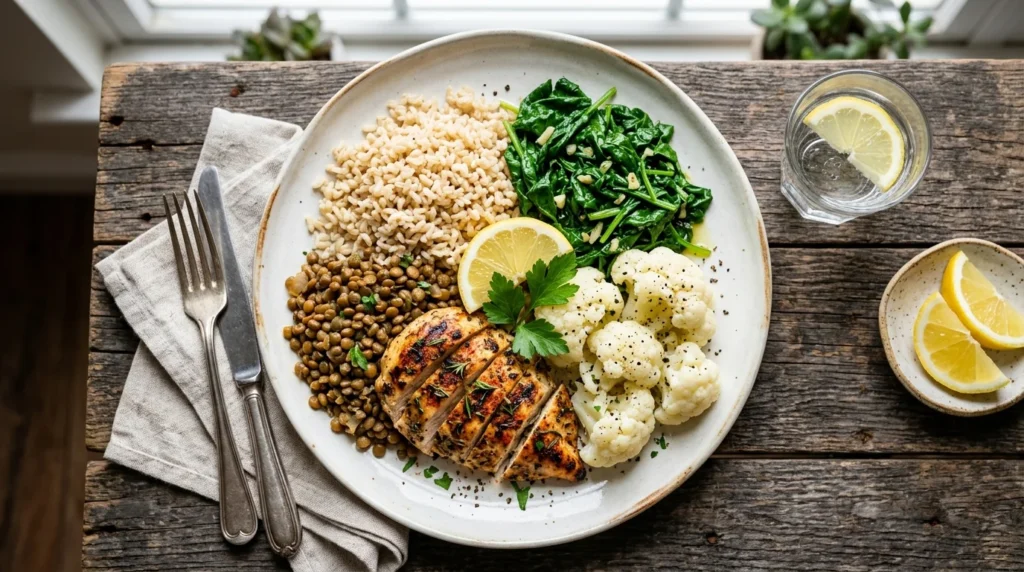
A high-protein diet plan for weight loss puts a solid portion of protein at every meal and snack, keeps your total calories slightly below what you burn, and fills the rest of the plate with vegetables and whole grains. Protein keeps you full for longer and helps you hold on to muscle while you lose fat, which makes it one of the most useful changes you can make.
Most people assume that means egg whites and chicken breast on repeat. It does not. This guide shows how much protein you need, why it works, and gives you a full 7-day meal plan built around everyday foods like daal (lentils), chana (chickpeas), eggs, yogurt, fish and chicken, with approximate protein and calories for each day.
What Counts as a High-Protein Diet?
There is no single cutoff. “High-protein” is relative to where you start, and many people are surprised by how little protein they eat when they first track their meals for a week.
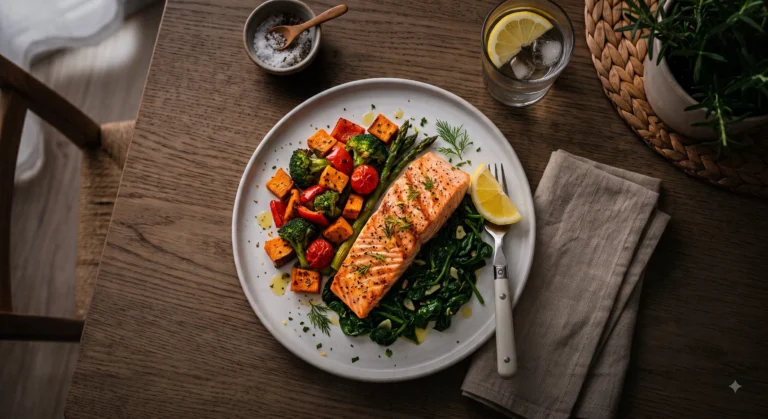
A simple way to picture a high-protein plate is to fill half of it with non-starchy vegetables such as spinach, okra, bottle gourd, cauliflower or fenugreek leaves. Keep a quarter for whole grains like brown rice or whole wheat roti (flatbread), and give the last quarter to a real protein source such as chicken, fish, eggs, lentils, cottage cheese or yogurt. Add a piece of fruit and plenty of water, and the plan is balanced.
How Much Protein Do You Need?
The recommended daily allowance for healthy adults is 0.8 grams of protein per kilogram of body weight. Treat that as a floor, not a target. For people who exercise regularly, the International Society of Sports Nutrition puts the range at 1.4 to 2.0 grams per kilogram per day (ISSN position stand). For a 70 kg person, that works out to roughly 100 to 140 grams a day.
Instead of chasing one big number, split it across the day. Aim for about 25 to 40 grams at each main meal, then add one or two snacks of 10 to 20 grams. To see what that looks like for your own body, start with our Calorie Calculator or Maintenance Calories Calculator. Needs vary with age, activity and health, so a registered dietitian can personalize this for you.
Why Protein Helps With Weight Loss
Protein’s biggest advantage is not muscle building. It is fullness. A meal with enough protein keeps you satisfied for longer, which cuts down on mindless snacking later. Digesting protein also burns more calories than digesting carbohydrate or fat, an effect known as the thermic effect of food, although the difference is modest.
Protein also helps protect lean muscle while you eat fewer calories. That matters because muscle supports your resting metabolism, and losing muscle instead of fat makes your new weight harder to maintain. Protein-rich meals tend to cause smaller blood sugar swings too, which means fewer energy crashes and sudden cravings. Pair it with regular exercise and protein becomes the raw material your body uses to repair muscle after workouts. For a structured way to add movement, see our 30-day weight loss challenge.
Animal and Plant Protein
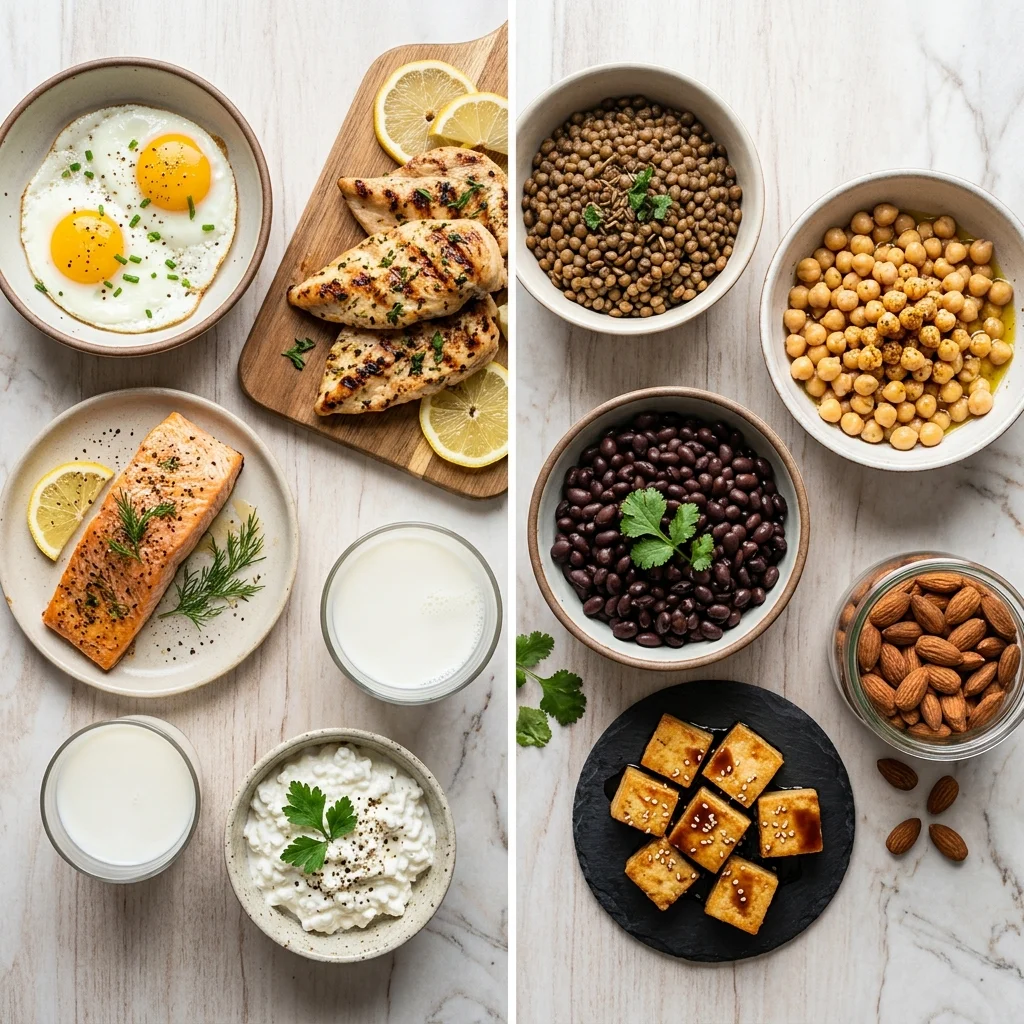
Animal proteins such as dairy, eggs, meat and fish are “complete,” meaning they contain all the essential amino acids your body cannot make. Most plant proteins are low in one or more of them on their own, so vegetarians do best by mixing sources across the day, for example daal with roti or rice, or chana with yogurt.
Milk, cottage cheese and yogurt give you protein alongside calcium. Eggs are one of the easiest complete proteins, and chicken, fish and lean meat are efficient options too. On the plant side, lentils, chickpeas and beans pair protein with fiber, and tofu comes close to animal protein. Nuts and seeds are worth eating, but their main value is healthy fat rather than protein.
One thing worth knowing is that lentils and yogurt are useful but not as protein-dense as many people assume. A cup of cooked lentils has about 18 grams of protein, but also around 40 grams of carbohydrate. They are valuable for fiber and nutrients, so keep eating them, but do not rely on them alone to hit your target. Add more concentrated sources such as eggs, fish, chicken, cottage cheese or tofu.
A Sample 7-Day High-Protein Meal Plan
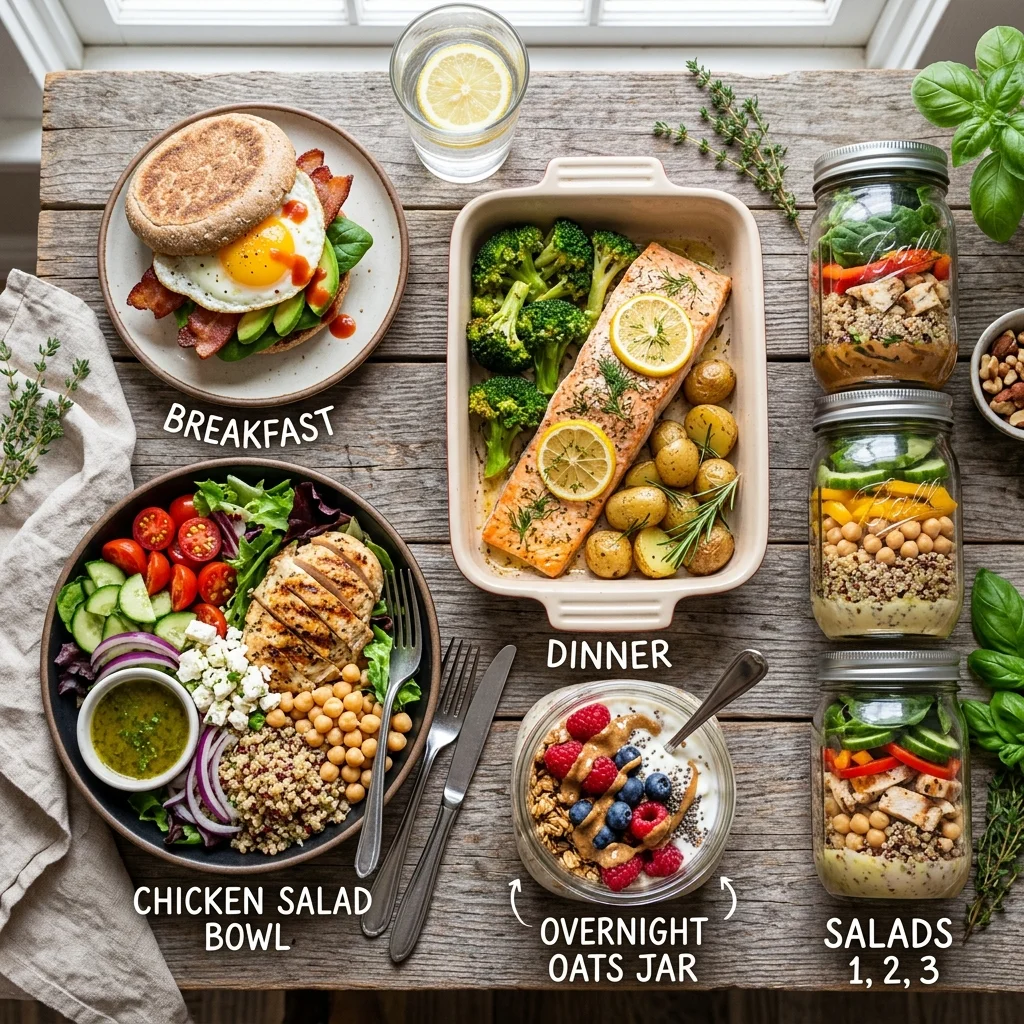
Think of this as a rotation you can shuffle, not a rigid script. Each day totals roughly 100 to 130 grams of protein and 1,300 to 1,500 calories, which suits many adults of average size. The figures are estimates based on typical food values and change with portion size and cooking oil.
A quick guide to the terms in the table: daal is cooked lentils, chana is chickpeas (roasted chana is a dry, crunchy snack), roti is whole wheat flatbread, sabzi is a cooked vegetable dish, and raita is yogurt mixed with cucumber or herbs. Besan chilla is a savory pancake made from gram (chickpea) flour, and hung curd is thick strained yogurt, similar to Greek yogurt.
| Day | Breakfast | Lunch | Dinner | Snacks | Approx. protein / calories |
|---|---|---|---|---|---|
| 1 | 2-egg omelet with spinach and tomato, 1 roti | Grilled chicken (120 g), large salad, 1/2 cup rice | 1 cup daal, vegetable sabzi, 1 roti | 3/4 cup thick plain yogurt with an apple; 30 g roasted chana | 105 g / 1,430 |
| 2 | Overnight oats with 3/4 cup Greek or hung-curd yogurt and berries | 1 cup chickpea salad with cucumber and tomato, 1 roti | Grilled fish (120 g), 2 cups vegetables, 1/2 cup rice | 2 boiled eggs; 1 glass low-fat milk with 10 almonds | 97 g / 1,450 |
| 3 | 2-egg vegetable scramble with 1/2 cup cottage cheese, 1 roti | Grilled chicken (120 g) with salad and mint chutney, 1 roti | 1 cup lentil soup, stir-fried tofu (150 g) with vegetables | 3/4 cup Greek yogurt; 30 g roasted chana | 130 g / 1,470 |
| 4 | 2 boiled eggs, 1 roti, cucumber, small banana | 1 cup chickpea curry, 1/2 cup rice, salad, 1/2 cup raita | Grilled chicken (120 g), sauteed vegetables, 1 roti | 1/2 cup cottage cheese with cucumber; 20 g almonds | 101 g / 1,470 |
| 5 | 2 besan chillas with vegetables, 3/4 cup yogurt | Grilled fish (120 g), salad, 1/2 cup rice | 1 cup daal, vegetable sabzi, 1 roti | 2 boiled eggs; 1 glass low-fat milk | 100 g / 1,380 |
| 6 | Egg and vegetable wrap (2 eggs, 1 roti) | Chicken and vegetable stir-fry (120 g chicken), 1/2 cup rice | Tofu (150 g) and vegetable curry, 1 roti | 3/4 cup Greek yogurt with berries; 30 g roasted chana | 102 g / 1,325 |
| 7 | 1/2 cup oats with milk, 10 almonds and 1 boiled egg | 1 cup daal, vegetables, 1 roti, 1/2 cup raita | Grilled fish (120 g), salad, 1 roti | 1/2 cup cottage cheese; 15 almonds | 98 g / 1,470 |
If you are vegetarian, swap the chicken and fish for tofu, cottage cheese, paneer (firm Indian cheese), eggs if you eat them, or an extra cup of lentils or chickpeas. A protein supplement can help if you still fall short.
How to Adjust the Plan
The plan is a template, not a prescription. Find your daily calorie target with the Maintenance Calories Calculator and aim for a gentle deficit instead of a steep cut. As a rough rule of thumb, eating about 500 calories a day below maintenance leads to around 0.5 kg (1 pound) of loss per week. If the plan above is too little food for your size, add portions of rice, roti, fruit or yogurt rather than cutting protein. If you feel weak, dizzy or constantly hungry, eat more and speak to a doctor or dietitian.
Check the calories and protein in your own meals with the Food Calories Calculator. For snack ideas that fit this plan, see what you can eat before bed to lose weight and our list of 35+ low calorie foods.
Meal Prep Tips That Save Time
The habit that makes the biggest difference is batch-cooking breakfast. Boil a batch of eggs or make egg muffins or chillas on Sunday, and you remove the “what do I eat” decision every morning. The same works for a big pot of daal, a tray of grilled chicken or a bowl of chickpea salad kept in the fridge for fast lunches.
Start every meal with a protein anchor such as eggs, chicken, fish, yogurt or tofu. Build the rest of the plate around non-starchy vegetables, add a moderate portion of carbs like rice, roti, oats or potato, and finish with a little healthy fat such as olive oil or a few nuts. Keep backup options on hand, like boiled eggs, tinned tuna or roasted chana, for days when cooking is not happening.
A Simple Grocery List
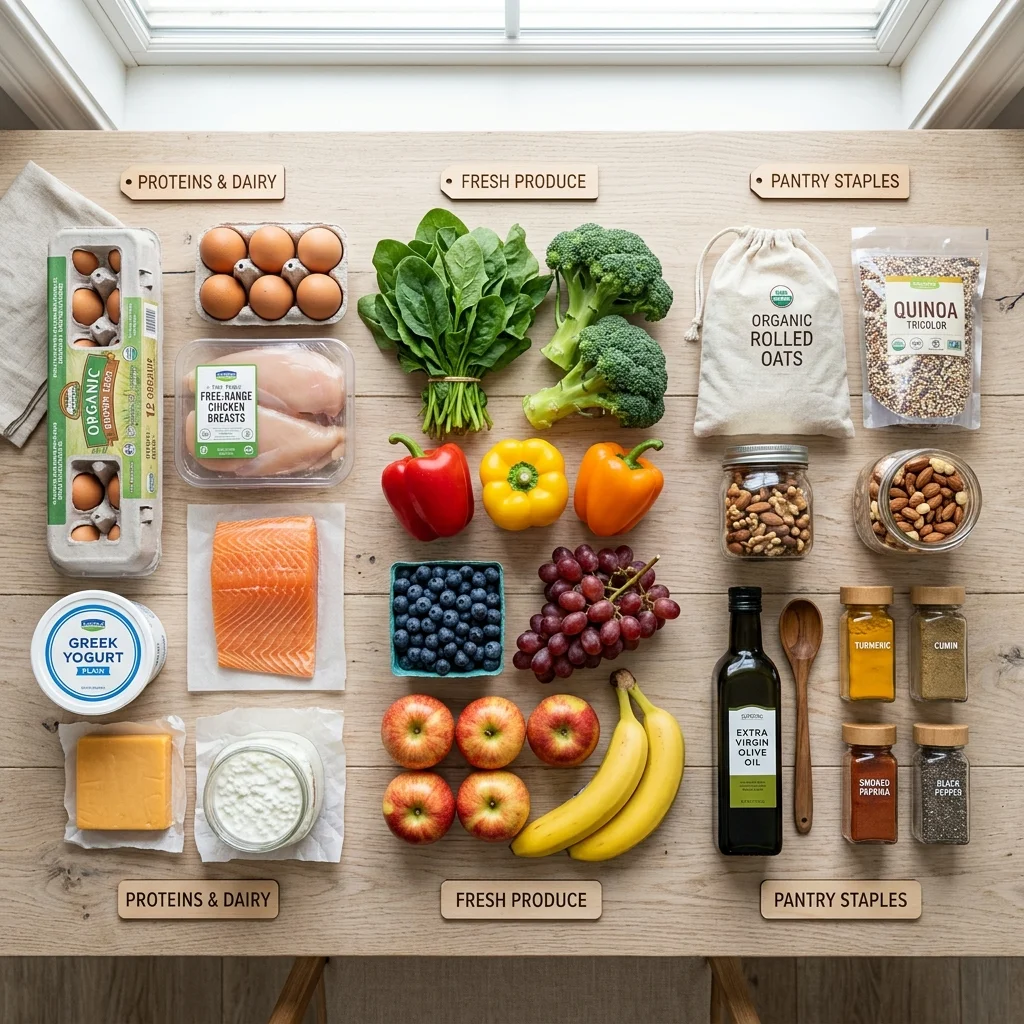
A high-protein shopping list comes in three parts. For protein and dairy, buy eggs, chicken, fish, tofu, cottage cheese and thick plain yogurt. For produce, stock leafy greens, cauliflower, okra, bottle gourd, tomatoes, cucumbers and a rotating mix of fruit. For the pantry, keep daal, chickpeas, oats, whole wheat flour, brown rice, nuts, besan (gram flour) and basic spices like cumin, turmeric and garam masala. Keep the list boring and repeatable, because that is what makes the healthy option the easy one.
Who Should Be Careful
A higher protein intake is safe for most healthy adults, but it is not right for everyone. If you have kidney or liver disease, are pregnant or breastfeeding, are under 18, or take medication that affects your diet, speak to your doctor before raising your protein. If you have ever had a difficult relationship with food, speak to a professional before starting any weight loss plan.
Disclaimer This article is for general informational purposes only. It is not a substitute for professional medical or nutritional advice. Please consult a registered dietitian or doctor before making major changes to your diet.vitaclac.com is not liable for any loss or injury resulting from reliance on this information.
Frequently Asked Questions
Quick answers to the most common high-protein diet questions tap any question to expand.
Calculate Your Exact Calorie & Protein Targets
Hit your high-protein diet goals with complete accuracy. Use our free, evidence-based calculators to find your personalized daily energy needs and look up individual food macros.
Was This Article Helpful?
Your feedback helps us improve our content. This form is not connected to customer support — for questions, please visit our Contact Us page.




2 Comments