Does Birth Control Really Cause Weight Gain?

Disclaimer This article is based on general medical research and publicly available studies on hormonal contraception. The author is not a licensed medical professional personal examples shared here are illustrative, not clinical case studies.
A client once texted me the night before her appointment: “I feel like I’ve gained ten pounds since starting the pill.” Her actual numbers told a different story. The scale hadn’t moved more than a pound.
That gap between feeling heavier and what the scale shows is common. It usually points to water retention, not fat gain.
Here’s the short version, method by method. The combined pill, the minipill, the patch, and the hormonal IUD (Mirena) all carry no significant weight gain in most people. Depo-Provera the shot is the real exception. It has real numbers behind it. The implant sits in between.
Studies find little effect, but many people still blame it and stop using it. Barrier methods, the copper IUD, and emergency contraception carry no hormones. So there’s no mechanism for weight change at all.
Where the fear comes from
Some of this anxiety is inherited history rather than current science. The oral contraceptive launched in the UK in the 1960s. It carried far heavier estrogen and progesterone doses than any pill sold today. The earliest formulation, dosed with mestranol, packed roughly 150 mcg of synthetic estrogen.
That’s reckless compared with the 20 mcg to 50 mcg standard now. Health complications were more common back then. The side effect reputation stuck around long after the combined pill itself changed.
That reputation hasn’t kept pace with the proof. A review stacking up 49 studies of research looked at today’s hormonal methods. It found the connection to weight gain minimal at best. One trial followed a progestin-only pill for 6 months to 12 months. It clocked an average gain under 4.4 lbs closer to fluid retention than actual fat.
Drug labels still list weight gain and weight loss as possible side effects, but that’s mostly regulatory caution, not proof of a real pattern.
What’s actually happening in the body
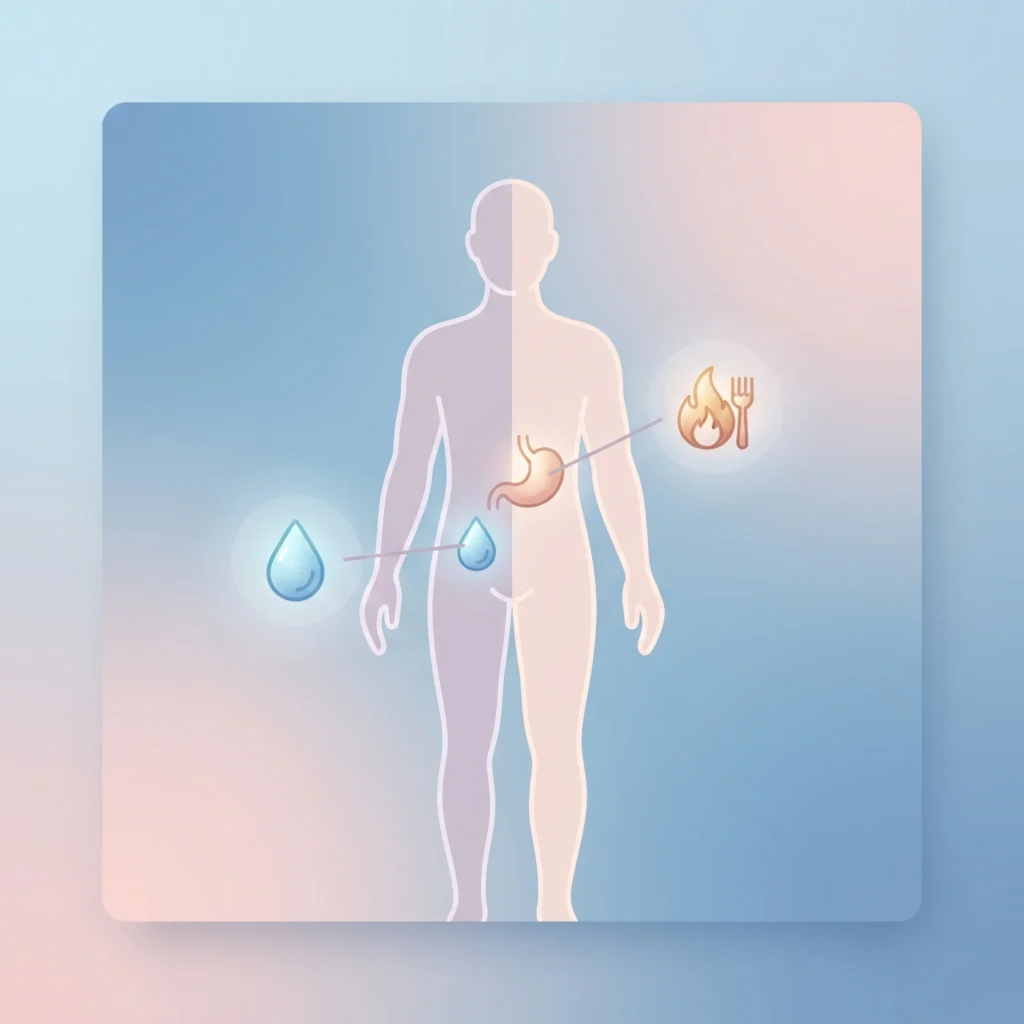
Hormones aren’t entirely innocent, just narrower in effect than their reputation suggests. Estrogen pulls in fluid, producing bloating that mimics premenstrual bloating.
Progesterone cranks up hunger and sends you chasing high-calorie foods. That can spill into emotional eating or binge eating, especially with progestin-only methods like the shot. Neither mechanism reliably adds body fat on its own.
Genetics may play a quiet role too. Early research into genetic variation hints that some people are more prone to weight gain under hormonal contraception than others. Nothing yet lets a doctor predict who that applies to before the fact.
Everyday life usually explains more than the pill does

Before blaming birth control, I ask three things. Has your diet changed? Did your exercise routine drop off? Or has your job gone more sedentary? Rising calorie intake and a slower age-related metabolism often explain more than hormonal contraception ever could. Plain weight gain from ordinary life looks identical to anything hormone-related on paper.
Timing makes this harder to untangle. Most people gain 1-2 lbs per year in the 20-35 age range simply from age-related metabolism changes. That window happens to overlap with when most people start birth control. So it’s genuinely unpredictable whether the pill or the calendar deserves the blame for any given change on the scale.
A stalled metabolism or an unnoticed underlying condition is worth ruling out first. And building muscle mass through strength training will also move the scale, even though that’s fat-free tissue.
The one method with real numbers behind it: the shot
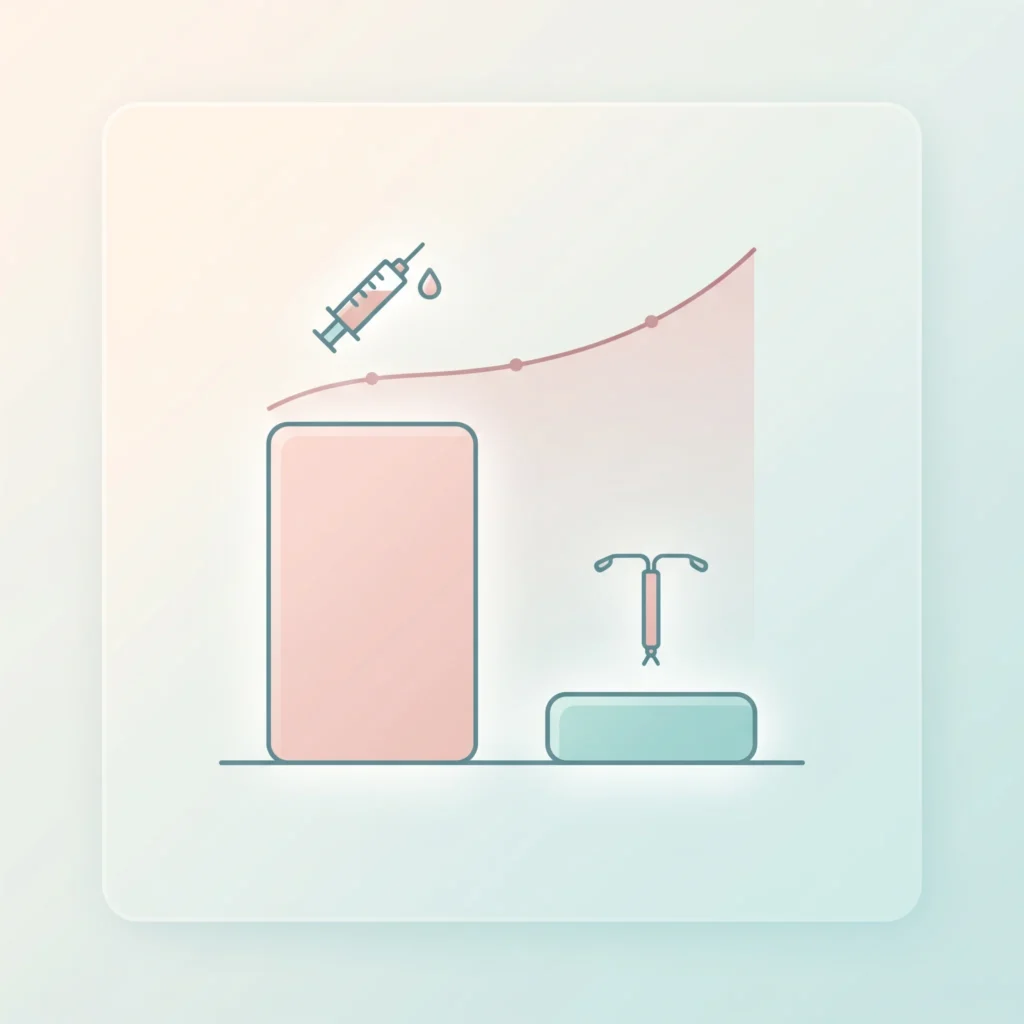
Depo-Provera’s concentrated progestin cranks appetite hard enough that trial data show a real difference. Studies compared shot users against copper IUD users. They found an average gain around 5 lbs over 1 year. That widened to roughly 11 lbs once researchers tracked users out to 3 years.
The effect isn’t spread evenly. Teens gain more than adults, and Black users report it more often. People who start out underweight see sharper change, alongside tracked bumps in body fat, BMI, and cravings for high-calorie food. As many as 40% of injection users cite weight gain as their reason for discontinuation. Compare that with only about 0.9-1.5% of pill users.
By contrast, a 2017 study on the implant found essentially nothing. Even so, perceived weight gain remains a top reason people cite for stopping it anyway. The broader IUS family (Mirena) shows only a minor dip in lean mass. Total body weight barely shifts.
Managing weight while on birth control

My approach barely changes based on contraception, because weight loss fundamentals don’t care about hormones. A sensible calorie deficit, a nutritionally balanced diet, and enough water intake beat any crash plan. Remember, half the “weight” people obsess over is just water weight.
Aim for roughly 30-60 minutes of moderate to vigorous exercise most days. Add strength training across 2 days weekly. Slow down with mindful eating: smaller portions, more produce, fewer sugary snacks.
One 18-month trial on combined hormonal contraception found both groups lost weight through diet and exercise initially. But only the birth-control group regained weight by the end. Leaning on social support and peer support helps over time. Active stress management matters too, since stress quietly drives overeating.
When nothing shifts the number, ask a doctor about weight-loss medication or surgery. That’s a legitimate option, not a failure. Separately, one trial suggested combined hormonal contraception might make weight loss harder to hold onto.
This applied to people managing obesity after a structured weight-loss program, though larger studies still need to confirm that.
Stopping the pill, and can birth control ever cause weight loss?

Stopping the pill tends to bring its own short list of adjustments unrelated to weight. Headaches, breast tenderness, and cycle changes show up first. If a weight shift follows, hormone fluctuations, lingering water retention, or appetite changes settling out usually explain it. It’s almost always temporary.
Here’s a detail most people never hear: no birth control is designed for weight loss. But Yasmin, a combined pill built around drospirenone, lists weight change as an uncommon side effect.
Drospirenone behaves like a diuretic. It eases water retention and bloating, which shows up as lower weight without touching actual fat. It’s closer to an illusion of weight loss than the real thing.
On body shape more broadly: water retention can create a puffier look. Estrogen may nudge fat storage toward the thighs, hips, and breasts even when total weight barely moves. That effect fades with progestin-only methods.
Other side effects worth knowing
Weight is far from the only thing worth tracking. Hormonal birth control can bring nausea, spotting, headaches, breast tenderness, mood changes, vaginal discharge, lower libido, cramping, pelvic pain, and acne. The IUD carries its own separate list.
It brings a higher risk of UTI and bladder infections, cramps, irregular bleeding, and either heavier periods or longer periods. Condoms and diaphragms occasionally trigger skin irritation or general sensitivity. Emergency options like levonorgestrel and ellaOne may bring nausea or stomach upset, but not weight gain.
If weight is a dealbreaker, here are the non-hormonal routes
If sidestepping hormones entirely sounds appealing, there’s a real menu. Consider barrier methods like condoms and diaphragms, spermicides, the copper IUD, or a prescription route like Phexxi (a contraceptive gel). For anyone who wants pregnancy prevention to be permanent, tubal ligation and vasectomy are the two permanent options worth a real conversation.
A doctor can walk you through effectiveness rates against your actual lifestyle. The right choice is rarely about weight alone. And switching methods, or even stopping birth control altogether, doesn’t guarantee a weight reset either.
Disclaimer: This article is for informational purposes only and is not a substitute for professional medical advice. Please consult a doctor before starting, stopping, or switching any birth control method.vitaclac.com is not liable for any loss or injury resulting from reliance on this information.
People also ask
The injectable contraceptive Depo-Provea stands alone here. Its concentrated progestin formula ramps up appetite enough to produce measurable fat increases roughly 5 lbs after the first year and closer to 11 lbs by year three in tracked users. Every other mainstream option whether it’s a daily pill, a skin patch, an arm implant, or a Mirena-style IUD has failed to show meaningful fat accumulation across dozens of controlled trials. Any number that moves on the scale early on is almost certainly extra fluid, not stored body fat.
Don’t count on it. If hormonal contraception left you holding a couple of extra pounds of water, that puffiness usually drains away on its own once your body readjusts typically within two to four weeks. But shedding actual body fat after quitting the pill requires the same effort it always does: eating fewer calories than you burn, staying active, and giving your metabolism time to respond. The act of stopping a prescription alone won’t reshape your body.
Start by recognising that bloating and fat are two separate problems. For the bloating side, drink more water (not less) and cut back on salty, processed snacks. For the appetite side especially relevant if you’re on a progestin-heavy method lean on protein and fibre at every meal to keep cravings in check. Layer in 30 to 60 minutes of movement on most days and hit the weights at least twice a week. That combination protects your metabolic rate regardless of which contraceptive you use.
On the pill, patch, ring, or IUD, most people see the needle move by one to four pounds at most and that change is almost entirely water that levels out within a couple of cycles. The outlier is the Depo-Provera shot: study participants packed on an average of five pounds in twelve months, climbing toward eleven pounds by the three-year mark. Teenagers and those who start at a lower body weight tend to experience the steepest climb.
Calculate Your Nutrition Targets
Use our suite of free health calculators to track your daily calorie needs, manage weight loss, and optimize your nutrition.
Was this article helpful?
Your feedback helps us improve our guides. Need support? Reach out via our Contact Us page.